MADE / AGAIN
Process

Built to the same standard.

Our additions are simple by design: a hardwood-and-brass mount that lets a textile hang with presence, or a pillow form that gives remaining cloth a useful second life.

The original textiles were made from real fiber, natural dye, and practiced hands. What we add follows the same logic: materials chosen for substance, touch, and durability rather than surface effect.

  • Solid hardwood for every rod and clamp, not veneer over particleboard
  • Solid brass hardware, not brass-plated steel
  • Natural-fiber cord and twine, not synthetic cord
  • Down-alternative fill in pillows, not foam
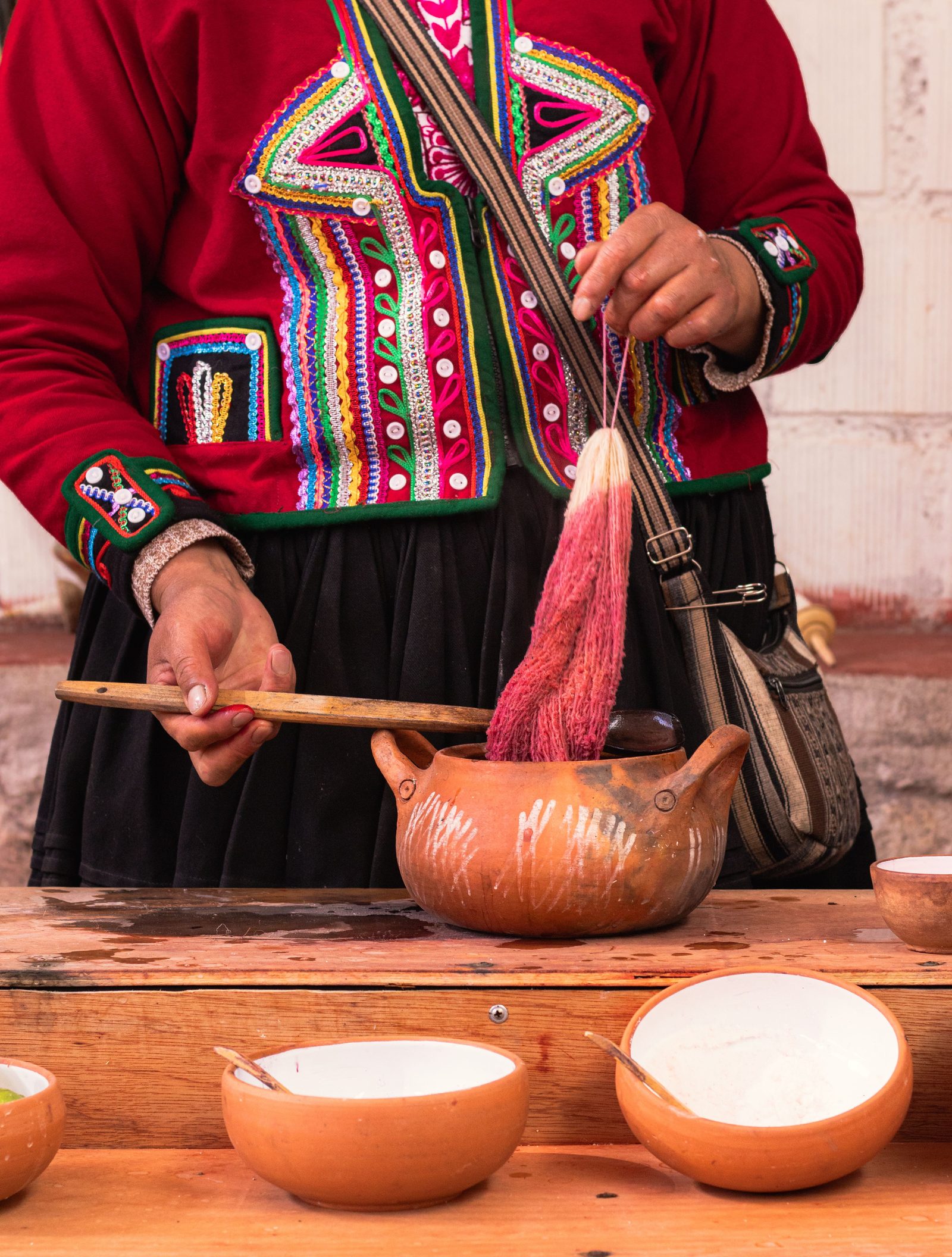
Hand-dyed wool yarn being lifted from a clay dye pot
The traditions

Two traditions,
living memory.

Every textile comes from a specific place and practice, not from a vague idea of craft. The first line focuses on two traditions, Andean frazada weaving and Shipibo kené embroidery, and each is described on its own terms.

Andean Frazada

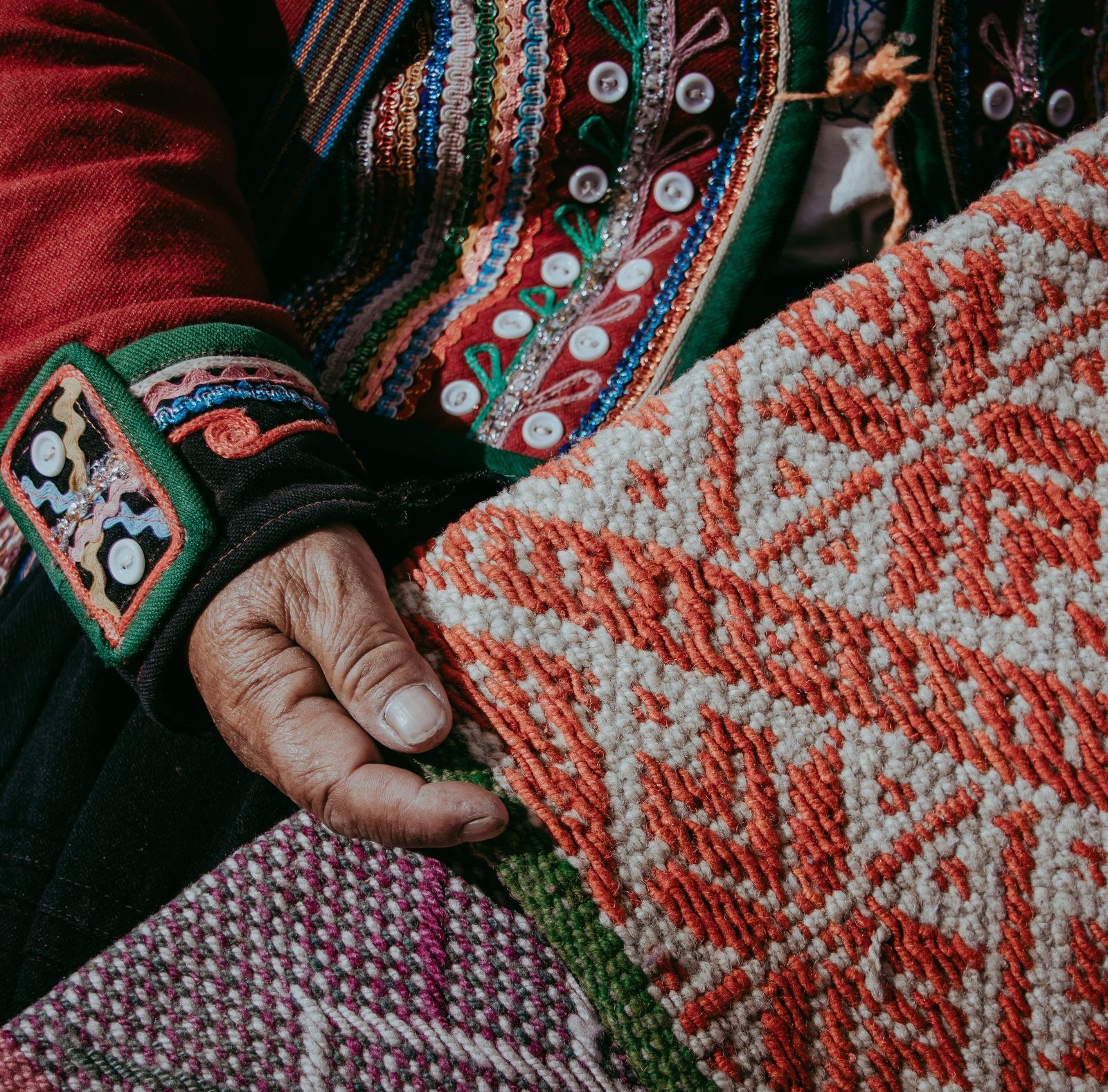
Peruvian frazadas are woven on backstrap looms, a technique with deep roots in the Andes. The loom is simple: wood, bone, and cord, tied between a fixed point and the weaver's body, so the maker sets the tension in every row. Many are dyed with pigments drawn from local plants, minerals, and insects, then woven in highland regions where climate, color, and use all shape the cloth.

Shipibo Kené

Shipibo textiles are hand-embroidered by artisans of the Shipibo-Konibo people of the Ucayali region in the Peruvian Amazon. Their geometric kené patterns belong to a distinct visual and cultural tradition. We describe specific meanings only when they have been confirmed directly with the maker or community, and leave anything unverified plainly unclaimed.

The cutting rule

Cut once,
carefully.

We cut only when the object calls for it. Newly made textiles from trusted artisans may become pillows or be trimmed to fit a mount cleanly. Vintage, rare, or exceptional pieces are left whole. The rule is simple: cut with intention, never by default.

Care

Tough as wool,
precious as art.

Care is simple and conservative. Spot clean with a damp cloth and mild, pH-neutral soap, blotting rather than rubbing. Keep textiles out of direct sun, since natural dye can fade with UV exposure.

  • Vacuum on low suction with a brush attachment.
  • Never machine wash or dry-clean a frazada, Shipibo textile, or pillow cover.
  • Store removable covers flat or loosely rolled in a dry place.
  • Wipe wood and brass with a dry or barely damp cloth, and keep mounts away from direct heat.
Close detail of a hand-woven textile pattern held in a weaver's hand
The list

The stock is limited.
The list gets first pick.